Bio4Energy

  • Research
    • Platforms
    • Strategic Funds & Projects
    • Publications
  • Context
    • Global Challenges
    • Biomass Resources
    • Biorefineries
  • Education
    • Bio4Energy Graduate School
    • PhD Projects
    • Alumni
    • Undergraduate Education
  • Collaboration
    • Research Collaboration
    • Bio4Energy Advisory Board
  • About Us
    • Bio4Energy — A Strategic Research Environment
    • Contact
    • Open Positions
    • Download Materials
  • News & Events
    • Bio4Energy Calendar
  • Click to open the search input field Click to open the search input field Search
  • Menu Menu
Home1 / News2 / Creation of Value Chains for Biochar as Alternative to Fossil Fuels in...
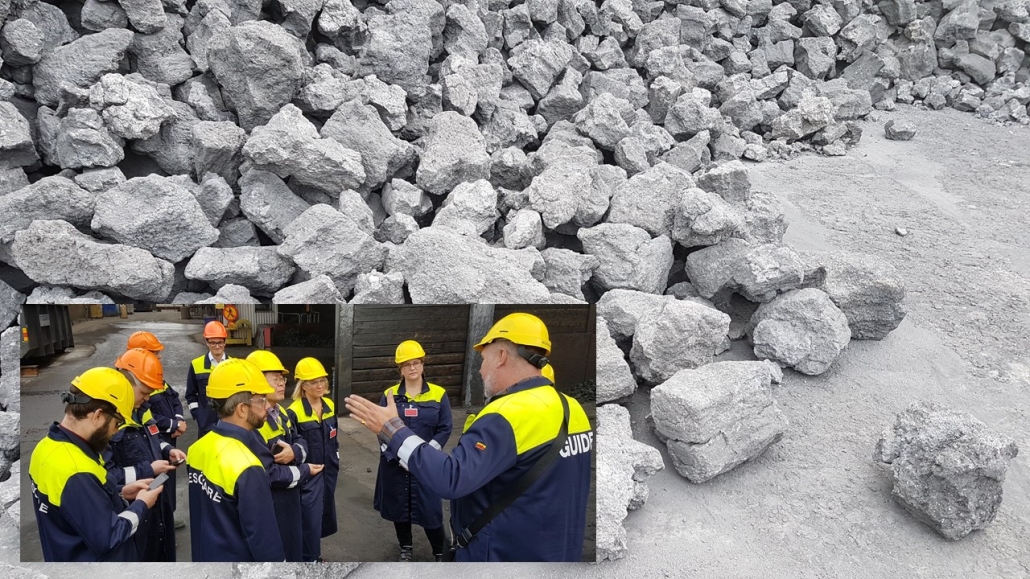
Coke-oven coke. Tour of car maker Volvo's GTO Foundry at Skövde, Sweden in insert. Photos by courtesy of David Agar.

Creation of Value Chains for Biochar as Alternative to Fossil Fuels in Industry in New Project

22 October, 2024/in News/by Anna Strom

A grouping of Bio4Energy experts on systems analysis have won a large grant to map out new value chains for the production of biochar, a type of charcoal, for use in industry or as a carbon sink.

Biocarbon – with the application biochar, which is a form of biomass pre-treated in high temperatures and in a limited-oxygen environment – is being extensively investigated as an alternative to fossil coal in industrial processes, such as in the iron and steel industry.

However, with each major new replacement product comes the need to ascertain that it is sustainable in terms of economics, as well as social and environmental impacts; and that it can form or fit into the context it is in.

In the new project, PhD students will work together to map out a comprehensive scheme for value chains from raw material supply to industrial markets for this renewable technology.

In the new project, three new PhD students will work together to map out a comprehensive scheme for value chains from raw material supply to industrial markets for this renewable technology. They will perform their work from the Bio4Energy partner universities Luleå University of Technology and the Swedish University of Agricultural Sciences (SLU), both located in northern Sweden.

The project is part of a national Graduate School in Energy Systems, funded by the Swedish Energy Agency and coordinated by Linköping University (LiU), Sweden.

In addition to new value chains for production, the project will deliver policy recommendations and create a pool of in depth knowledge about markets, tools for policy-making and technology.

In addition to new value chains for production, the project will deliver policy recommendations and create a pool of in depth knowledge about markets, tools for policy-making and technology.

“We are going to develop knowledge about raw material sources for biocarbon and inventory flows of biomass in Sweden”, said David Agar, senior lecturer at SLU.

“We will look at surplus sources in pulp and paper and saw dust, forestry residues…. It doesn’t mean that we have to stick only with the big industries. We could look at recycled products or waste”, Agar said.

When it came to the potential of biocarbon and biochar as an alternative technology to fossil fuels, Agar said that the project would map both potentials and limitations.

“You cannot expect to have exactly the same process. You have to have something to compensate for the high carbon content of fossil fuels. You have to have a very pure carbon source, with good heating properties”, he added.

Carbon source still needed despite electrification

While it is true that there is a sweeping electrification underway, there are still industrial processes that require either a fossil or alternative source of fuel or gas.

”In fossil fuel-free steel production the plan is to use electricity both in the process of direct reduction and in the electric arc furnace”, according to project leader Elisabeth Wetterlund, Luleå University of Technology (LTU).

Direct reduction is the removal of oxygen from iron ore or other iron bearing materials in the solid state, while an electric arc furnace is a type of furnace used in steelmaking to melt and refine steel scrap or other raw materials, transforming them into molten steel.

Professor Wetterlund explained that while both of these processes are powered by renewable electricity, the addition of a fossil or renewable carbon source is still required to complement the hydrogen that is used for the reduction.

“Despite the electrification we still need carbon to produce the kind of steel we want and create appropriate conditions inside the electric arc furnace. This is where biochar comes in, as a replacement for coal and coke-oven coke”, she wrote in reply to questions.

Contacts

Elisabeth Wetterlund – Bio4Energy Systems Analysis and Bioeconomy, Affiliation with LTU

David Agar – Bio4Energy Systems Analysis and Bioeconomy, Affiliation with SLU

Dan Bergström – Bio4Energy Systems Analysis and Bioeconomy, Affiliation with SLU

Robert Lundmark – Bio4Energy Systems Analysis and Bioeconomy, Affiliation with LTU

Related projects

Nitrogen in biochars from biomass residual streams – forms, fate and plant availability in soils – Bio4Energy

Bio2Char – Pre-feasibility study of new residual streams as feedstock for production of biochar for industrial applications – Bio4Energy

Doped biochar materials for bio-based batteries – in-situ characterisation and understanding of structural versus electrochemical properties, BioBat – Bio4Energy

Design of biochar from residual streams – influence of fuel and process parameters on biochar properties for water and soil applications – Bio4Energy

Paving the road for introducing renewable energy carriers in large industries – Bio4Energy

Improvement of LCA and economic methodology for upscaling biofuel and bio material production – Bio4Energy

Activated and non-activated biochars and hydrochars from forestry-related waste streams for removal of environmental contaminants from sediments – Bio4Energy

Increasing the use of renewable energy carriers in Swedish mineral processing industries – Bio4Energy

Related news

Three-year Project Could Set Steelmaker Well on Way to Hydrogen-based Operations – Bio4Energy

Phase Out of Fossil Coal in Sweden’s Iron, Steel Industries on Cards – Bio4Energy

Role of Forests in Reining in Climate Change, Producing Energy – Bio4Energy
Tags: alternative fuel, Bio4Energy Systems Analysis and Bioeconomy, biocarbon, biochar, biorefinery education & training, fossil fuel replacement, industrial process, Luleå University of Technology, renewable energy, Swedish Energy Agency, Swedish University of Agricultural Sciences, systems analysis research
https://bio4energy.se/wp-content/uploads/2024/10/BiocarbonFutures_Coke-ovenCoke_DA281024.jpg 720 1280 Anna Strom https://bio4energy.se/wp-content/uploads/2022/08/Logo_stor_farg-300x74.png Anna Strom2024-10-22 15:22:562024-11-29 13:06:37Creation of Value Chains for Biochar as Alternative to Fossil Fuels in Industry in New Project
You might also like
Mixed forest. Photo by Anna Strom ©2022.©AnnaStrom Large Project on Integration of UN SDGs in Forest Management to Target Genetic Tree Breeding
Bio4Energy Graduate School: New course starts in 2024. Photos by Francesco Gentili and ©AnnaStrom.©AnnaStrom Bio4Energy Graduate School: Development of Biorefinery Innovations Up Next
Researchers Jonas Hedlund and Sofie Zätterqvist have won Luleå University of Technology's award Innovator of the Year 2022.LTU Innovation Award for R&D on Biogas Separation Technology to Bio4Energy Researcher
From left: Lina Hällström, Roberts Joffe, Ivan Carabante, and Linn Berglund at the Jubileumsfonden award ceremony on 14 May 2025 at Vetenskapens hus in Luleå. They had just received their research grants from the fund. Photo: Petra Älvstrand. Transforming Forest Residues into the Future: Bio4Energy Researcher Awarded Prestigious Grant
Senior lecturer and instrumentation expert Fredrik Forsberg, at Luleå University of Technology Geolab in 2022. Photo by courtesy of Fredrik Forsberg. Bio4Energy Partner LTU Part of ‘Largest Investment in Material Science in Sweden’
Dimitris Athanassiadis, Bio4Energy Systems Analysis and Bioeconomy, is new coordinator of the Graduate School.©AnnaStrom New Coordinator for Graduate School: Course Starts in 2024
Advanced students gathered at Umea, Sweden, for the course Wood Biology and Biotechnology. Photos by Anna Shevtsova and ©AnnaStrom.©AnnaStrom Training on Wood Biology, Biotechnology Fills Gap for Advanced Students of Biorefinery
A model of the Vertisà AB vertical gardening module. Photo by courtesy of Vertisà AB. Inventions by Bio4Energy Researchers Highlighted by Royal Academy for Future Potential

Latest news

  • Bio4energy Advisory bord meeting (digital)
    Bio4Energy Advisory Board meeting – EU perspectives on the bioeconomy and bio-based resources23 February, 2026 - 11:38
  • The Hidden Conversation Between Trees and Nitrogen10 December, 2025 - 15:16
  • From Wood to Wonder – Turning wood into advanced materials15 November, 2025 - 19:09

VISITING ADDRESS

Umeå University Campus Map

ADDRESS

Bio4Energy

Umeå University

SE-90187 UMEÅ

Sweden

LOG IN

Link to: Giant Park for Development of Bio-based Products, Materials, Opens in Northern Sweden Link to: Giant Park for Development of Bio-based Products, Materials, Opens in Northern Sweden Giant Park for Development of Bio-based Products, Materials, Opens in Northern...Fakta RISE pilothall i Örnsköldsvik • 3 våningar • 2 405 m2 • 14 meter hög • Miljöbyggnad Silver (Sweden Green Building Council) • Stora delar byggt i korslimmat trä • Komfort- och proceskyla hämtas från Örnsköldsviksfjärdens botten • Sedumtak (hjälper vattenavrinning och biodiversitet)RISE Link to: Innovator of Year Award to Bio4Energy Nanotechnology Experts Link to: Innovator of Year Award to Bio4Energy Nanotechnology Experts Linn Berglund and Kristiina Oksman share a smile in the hydrogel development laboratory, with kelp on display. Photo by courtesy of Kristiina Oksman.Innovator of Year Award to Bio4Energy Nanotechnology Experts
Scroll to top Scroll to top Scroll to top