Bio4Energy

  • Research
    • Platforms
    • Strategic Funds & Projects
    • Publications
  • Context
    • Global Challenges
    • Biomass Resources
    • Biorefineries
  • Education
    • Bio4Energy Graduate School
    • PhD Projects
    • Alumni
    • Undergraduate Education
  • Collaboration
    • Research Collaboration
    • Bio4Energy Advisory Board
  • About Us
    • Bio4Energy — A Strategic Research Environment
    • Contact
    • Open Positions
    • Download Materials
  • News & Events
    • Bio4Energy Calendar
  • Click to open the search input field Click to open the search input field Search
  • Menu Menu
Home1 / News2 / Role of Forests in Reining in Climate Change, Producing Energy
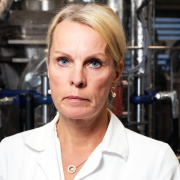
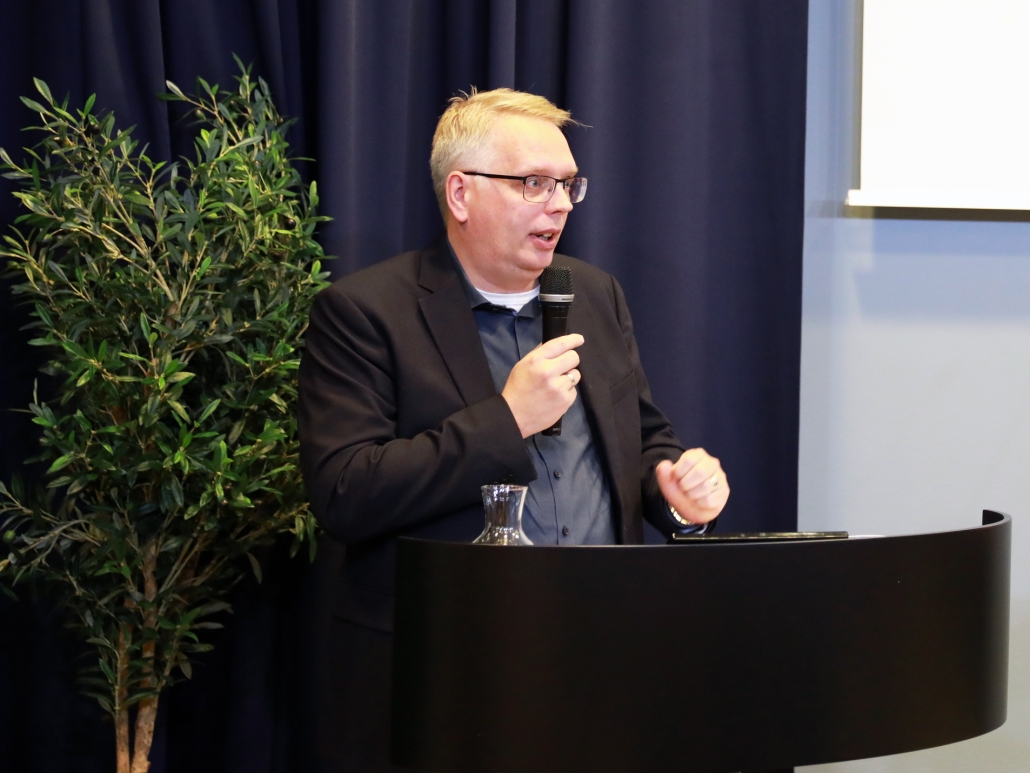
Economics professor Robert Lundmark says that all three aspects of sustainable development should be taken together when assessing the role of forest in climate change perspective. Photo by courtesy of Robert Lundmark.

Role of Forests in Reining in Climate Change, Producing Energy

27 September, 2023/in News/by Anna Strom

When it comes to the role of the forest in a perspective of climate change mitigation and energy production, a full picture including all aspects impacting their use and benefits is required to start to making sense of the “undeniably complex” discussion taking place in the media and politics.

All aspects of the forest as an economic resource, a provider of recreational value and its capacity for carbon sequestration should be considered, according to an academic expert on the matter.

Professor in Economics Robert Lundmark, Luleå University of Technology, tries to do just that, in a new report from independent nonprofit organisation Centre for Business and Policy Studies (SNS), headquartered in Stockholm, Sweden but with a 30-country-strong membership, according to its website.

Centering on the case of Sweden, with its history of forestry and timber exports, Lundmark starts by discussing the economically profit-bearing aspects of forestry. Timber and renewable energy production both bring revenue to an important business sector and prop up the Swedish economy.

He goes onto billing production of bio-based (or “green”) chemicals as having a beneficial social impact; along with forests or forested areas set aside for recreation or tourism activities.

Biodiversity and its protection and the forest’s capacity to act as a carbon sink, are among environmental considerations, he holds.

All these aspects should be included in a total analysis, according to Lundmark; for any estimates of appropriate trade-offs between the different areas to make sense.

“This is existing knowledge put in a different perspective… It is a balancing act to arrive at an optimal utilisation of forests. We need to consider all societal values or we can easily go wrong”.

Role of science, politics, markets

He stresses, however, that the role of science is to provide assessments and that of politics to correct missteps due to market “failure”.

“A functioning market guarantees an efficient allocation of forest resources. That is how it works in the trading of goods and services. The role of politicians is to correct market failures, for instance in cases where forest owners are not paid for preserving all benefits of the forest. That is why we highlight the discussion about internalising the cost of goods and services”.

A quick check of the Oxford Languages gives that to internalise in an economic sense, means to incorporate costs as part of a pricing structure, especially social costs resulting from the manufacture and use of a product.

Forests as a carbon sink

The assessments that scientists do are still important, because any attempts at cutting greenhouse gases must be cost efficient, according to Lundmark.

“We see that compensation would be required for change to be made on a large scale. Today forest owners are not compensated for leaving the trees in the forest” to promote longer rotation periods.

He says that the starting point is to recognise that forests and their trees are a finite resource and one that becomes more and more in demand along with economic growth.

“It is undeniably a complex debate with many dimensions to account for: Forest management, ecology, social and economic aspects and technical aspects. All of them must come into consideration when we estimate benefits and trade-offs”, Lundmark said.

Contact

Robert Lundmark — Affiliation with Luleå University of Technology

Bio4Energy Systems Analysis and Bioeconomy

Expert Report

The Role of Forests in the Energy and Climate Transition, Summary in English
Tags: Bio4Energy Systems Analysis and Bioeconomy, bioenergy, carbon capture, climate change abatement, Luleå University of Technology, role of forests
https://bio4energy.se/wp-content/uploads/2023/09/RobertLundmark_290923-e1695993061201.jpg 1431 1906 Anna Strom https://bio4energy.se/wp-content/uploads/2022/08/Logo_stor_farg-300x74.png Anna Strom2023-09-27 18:29:102024-03-15 15:10:43Role of Forests in Reining in Climate Change, Producing Energy
You might also like
Season Greeting from Bio4Energy. Collage and photos by Anna Strom ©2022.©AnnaStrom Season’s Greetings from Bio4Energy
A snap from a boreal forest in northern Sweden. Photo by Anna Strom ©2022.©AnnaStrom New Monies for Research to Bio4Energy Scientists from Swedish National Funders
Bio4Energy September Start for Bio4Energy’s Training to Scale up Bio-based Innovations
Researchers Jonas Hedlund and Sofie Zätterqvist have won Luleå University of Technology's award Innovator of the Year 2022.LTU Innovation Award for R&D on Biogas Separation Technology to Bio4Energy Researcher
From left: Lina Hällström, Roberts Joffe, Ivan Carabante, and Linn Berglund at the Jubileumsfonden award ceremony on 14 May 2025 at Vetenskapens hus in Luleå. They had just received their research grants from the fund. Photo: Petra Älvstrand. Transforming Forest Residues into the Future: Bio4Energy Researcher Awarded Prestigious Grant
Linn Berglund and Kristiina Oksman share a smile in the hydrogel development laboratory, with kelp on display. Photo by courtesy of Kristiina Oksman. Innovator of Year Award to Bio4Energy Nanotechnology Experts
Participants of the Nature Refines project on their way from Sweden to Finland, both of which Scandinavian countries are represented. Photos by courtesy of Francesco Gentili and Sarah Conrad. Water Filtration, Electrodes Expected from EU Project on Smart Use of Biomass Residue
Systems' Perspectives on Biomass Resources is an academic course about placing bio-based technologies and process into context via systems analysis. Elisabeth Wetterlund in insert. Artwork: No copying or sharing permitted.Bio4Energy: No copying or sharing Systems’ Perspective Needed in Societal Transition Research: Course Start

Latest news

  • Bio4energy Advisory bord meeting (digital)
    Bio4Energy Advisory Board meeting – EU perspectives on the bioeconomy and bio-based resources23 February, 2026 - 11:38
  • The Hidden Conversation Between Trees and Nitrogen10 December, 2025 - 15:16
  • From Wood to Wonder – Turning wood into advanced materials15 November, 2025 - 19:09

VISITING ADDRESS

Umeå University Campus Map

ADDRESS

Bio4Energy

Umeå University

SE-90187 UMEÅ

Sweden

LOG IN

Link to: Advanced Biofuels Conference 2023: Bio4Energy in Partnership Link to: Advanced Biofuels Conference 2023: Bio4Energy in Partnership Advanced Biofuels Conference 2023: Bio4Energy in PartnershipAdvanced Biofuels Conference 2023, main banner. Courtesy of Svebio Swedish Bioenergy Association.Svebio Link to: ‘Getting Prepared to Have Right Material Base’: Chemistry in Biorefinery in New Report Link to: ‘Getting Prepared to Have Right Material Base’: Chemistry in Biorefinery in New Report The timber we take out of forests should go toward constructing houses and furniture. Biorefinery is based on residues. Photo by Bent Christensen.Umea University‘Getting Prepared to Have Right Material Base’: Chemistry in Biorefinery...
Scroll to top Scroll to top Scroll to top