Bio4Energy

  • Research
    • Platforms
    • Strategic Funds & Projects
    • Publications
  • Context
    • Global Challenges
    • Biomass Resources
    • Biorefineries
  • Education
    • Bio4Energy Graduate School
    • PhD Projects
    • Alumni
    • Undergraduate Education
  • Collaboration
    • Research Collaboration
    • Bio4Energy Advisory Board
  • About Us
    • Bio4Energy — A Strategic Research Environment
    • Contact
    • Open Positions
    • Download Materials
  • News & Events
    • Bio4Energy Calendar
  • Click to open the search input field Click to open the search input field Search
  • Menu Menu
Home1 / News2 / Field Trials Confirm: Aspen Trees May be Modified for Easier Access for...
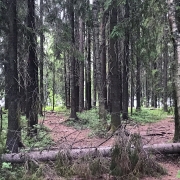
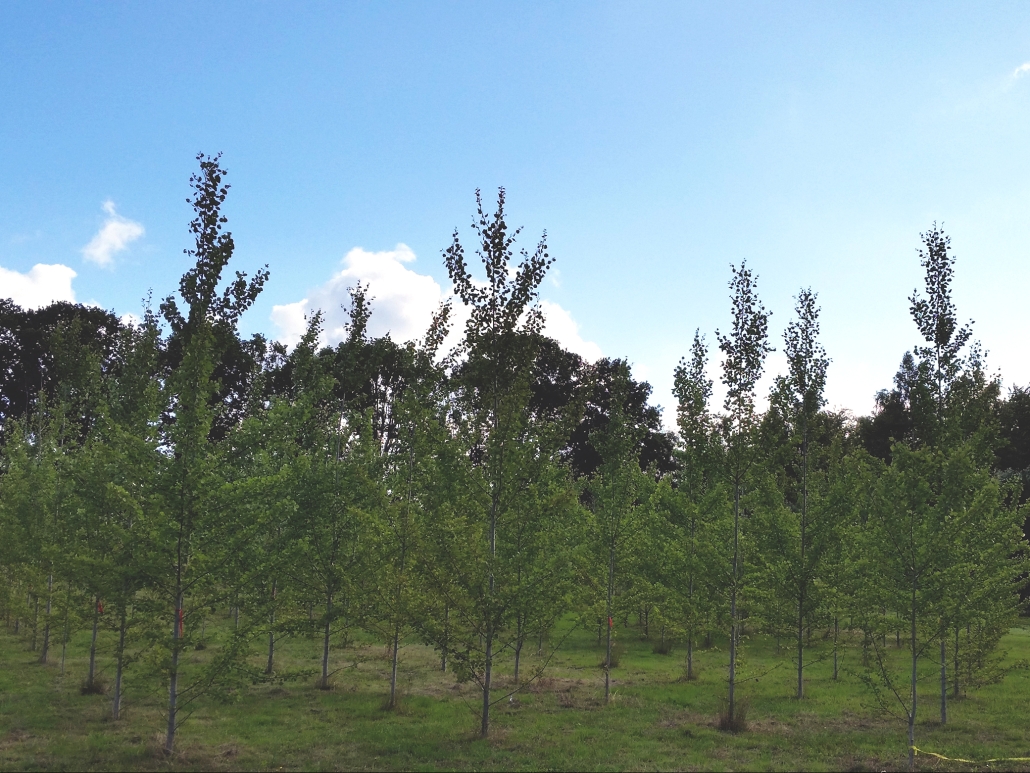
Field trials of growing genetically modified aspen trees in Sweden. Photo by courtesy of Ewa Mellerowicz.Bio4Energy

Field Trials Confirm: Aspen Trees May be Modified for Easier Access for Biorefinery Production

31 January, 2023/in News/by Anna Strom

Field trials of transgenic aspen trees have confirmed that genetic modification is indeed a possible avenue for rendering wood less resistant to breakdown into components suitable for making biofuel, “green” chemicals or bio-based materials.

Research just out shows not only how to modify tree plants for superior yield of desired sugar-based content, but also offers industry or investors proof-of-concept results from pilot-scale trials performed for the most successful combinations or “constructs” in science speak.

Most innovations require Proof of Concept to survive past the early stages of product development. It is a formalised way of providing evidence that demonstrates that a design concept or business proposal is feasible.

For the last decade, Bio4Energy has shepherded field trials of hardwood species such as aspen, under the leadership of professor Ewa Mellerowicz, Swedish University of Agricultural Sciences.

Collaboration partners include programme manager Leif Jönsson’s research team at Umeå University, as well as Bio4Energy research leaders at RISE Research Institutes of Sweden, the Wallenberg Wood Science Centre and others.

The results are expected to bring considerable benefit to the scientific community, given that no less than 32 so-called lines of genetically modified aspen trees previously evaluated only in greenhouse trials, have been grown and studied for five years in field plantations in Sweden.

“Whereas there are many examples of genetically modified trees that are improved in the greenhouse experiments, the trees with improved properties in the field are exceptional”, Mellerowicz told Bio4Energy Communications.

The fact that the field trials used material pre-selected from extensive greenhouse experiments, testing very large numbers of constructs, let the scientists bring about optimal results in the field. This way, the trees grew faster (produced more wood) and were more ready to release sugar-rich polymers, which are desired input materials for making biorefinery products.

“By [implementing a] systematic long-term and multi-level testing strategy, we were able to identify certain unknown function genes that improve field productivity and saccharification yield”, according to Mellerowicz.

Moreover the best transgenic lines were processed in a pilot-scale reactor, mimicking industrial conditions, to provide proof of concept for the strategy.

“The identified genes will be of particular interest to modify, using non-transgenic approaches to produce feedstocks that are GMO free, but have improved performance in the field and in the biorefinery”, she said.

This means that more research is needed before the findings can be demonstrated as a new technology, but the advantage created is that genes have been identified that could be targets for it.

Contact

Ewa Mellerowicz, Swedish University of Agricultural Sciences — Bio4Energy Forest-based Feedstocks, affiliation with the Umeå Plant Science Centre

Scientific article

The article Field testing of transgenic aspen from large greenhouse screening identifies unexpected winners, is published in the Plant Biotechnology Journal January 2023.

The authors are acknowledged as follows: Donev EN, Derba-Maceluch M, Yassin Z, Gandla ML, Sivan P, Heinonen SE, Kumar V, Scheepers G, Vilaplana F, Johansson U, Hertzberg M, Sundberg B, Winestrand S, Hörnberg A, Alriksson B, Jönsson LJ and Mellerowicz EJ.
Tags: aspen trees, Bio4Energy, Bio4Energy Forest-based Feedstocks, biorefinery production, field trials, genetic modification, pilot trials, plant breeding, RISE Research Institutes of Sweden, Swedish University of Agricultural Sciences, SweTree Technologies, Umeå Plant Science Centre, Umeå University
https://bio4energy.se/wp-content/uploads/2023/01/Field-trials-transgenic-aspen_EwaMellerowicz-e1675179310443.jpg 1562 2081 Anna Strom https://bio4energy.se/wp-content/uploads/2022/08/Logo_stor_farg-300x74.png Anna Strom2023-01-31 14:54:362023-04-03 15:46:22Field Trials Confirm: Aspen Trees May be Modified for Easier Access for Biorefinery Production
You might also like
From left: Nils Skoglund, Kajsa Sigfridsson Clauss and Konstantin Klementiev; hosting a workshop at Umeå, Sweden in November 2024.©AnnaStrom Breaking Down Benefits of Using Brilliant X-ray Light to Know Bio-based Materials: Workshop
Bio4Energy 2022 Bio4Energy Celebrates its 100th Thesis Defence by PhD Student
PhD students at a Bio4Energy event. Photo by ©AnnaStrom.©AnnaStrom 2022 Bio4Energy Annual Report Is Out
RISE Research Institutes of Sweden inaugurate the expansion of it test-bed environments for biorefinery. Photo by Maria Fäldt.RISE RISE to Invest SEK350 Million in Its Biorefinery Test Bed Environments
Trees play a vital role in maintaining the health of our planet and supporting human life in various ways. To use them as an economic resource, we advocate finding ways that will sustain both us and nature. Photo by AnnaStrom ©2024.©AnnaStrom Bio4Energy 2023: Full Steam Ahead in Education, Research, Forming Collaborations
Coke-oven coke. Tour of car maker Volvo's GTO Foundry at Skövde, Sweden in insert. Photos by courtesy of David Agar. Creation of Value Chains for Biochar as Alternative to Fossil Fuels in Industry in New Project
Grass after a summer rain in northern Sweden. Photo by Anna Strom ©2022.©AnnaStrom 2021 Bio4Energy Annual Report Is Out
Longstanding Bio4Energy member Mikael Thyrel is new platform leader for Feedstock Pre-processing. Photo by Anna Strom ©2023.©AnnaStrom New leader for Feedstock Pre-processing Eyes Critical Raw Materials as New Direction for Research

Latest news

  • Bio4energy Advisory bord meeting (digital)
    Bio4Energy Advisory Board meeting – EU perspectives on the bioeconomy and bio-based resources23 February, 2026 - 11:38
  • The Hidden Conversation Between Trees and Nitrogen10 December, 2025 - 15:16
  • From Wood to Wonder – Turning wood into advanced materials15 November, 2025 - 19:09

VISITING ADDRESS

Umeå University Campus Map

ADDRESS

Bio4Energy

Umeå University

SE-90187 UMEÅ

Sweden

LOG IN

Link to: New Projects Supported by Bio4Energy Strategic Funds Link to: New Projects Supported by Bio4Energy Strategic Funds New Projects Supported by Bio4Energy Strategic FundsAlgae production at Dåva, Umeå, Sweden. Photo by courtesy of Francesco Gentili. Link to: Breakthrough Innovation: Hydrogels from Norwegian Kelp to Be Commercialised Link to: Breakthrough Innovation: Hydrogels from Norwegian Kelp to Be Commercialised Bio4Energy scientists Kristiina Oksman (left) and Linn Berglund are showing slivers of the brown kelp used as input material, at their research laboratory.LTUBreakthrough Innovation: Hydrogels from Norwegian Kelp to Be Commercialised
Scroll to top Scroll to top Scroll to top