Bio4Energy

  • Research
    • Platforms
    • Strategic Funds & Projects
    • Publications
  • Context
    • Global Challenges
    • Biomass Resources
    • Biorefineries
  • Education
    • Bio4Energy Graduate School
    • PhD Projects
    • Alumni
    • Undergraduate Education
  • Collaboration
    • Research Collaboration
    • Bio4Energy Advisory Board
  • About Us
    • Bio4Energy — A Strategic Research Environment
    • Contact
    • Open Positions
    • Download Materials
  • News & Events
    • Bio4Energy Calendar
  • Click to open the search input field Click to open the search input field Search
  • Menu Menu
Home1 / News2 / New Project to Create Organic Waste-based Biorefinery
Bio4Energy©2022

New Project to Create Organic Waste-based Biorefinery

31 January, 2022/in News/by appdev.its

Bio4Energy is part of a new multi-partner project to create a biorefinery for organic waste—with end products such as bio-based plastics, animal feed, “green” chemicals, biofuels and higher alcohols (Fusel oil)—in a two-step process.

If successful, the result could become a trendsetter concept for how to create a virtually waste-free system of making the said commodities, but as bio-based alternatives to their current fossil resource-based counterparts.

Researchers at the University of Borås in Sweden gave birth to the idea that the concept of biogas making could be expanded to deliver much more than just biogas car fuel, which is produced from the fermentation of food and agricultural waste in an oxygen-free environment.  

In addition to this kind of bacterial break down of organic residues (anaerobic digestion), they want to add two more main processes to reuse all of the contents of the organic waste feedstock. These processes are referred to as ‘membrane reactors’ and ‘biological augmentation’, in scientific speak.

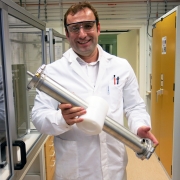
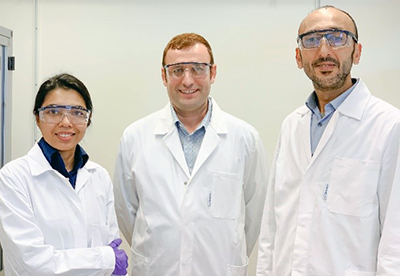
The new concept will be tested at “large-scale” research facilities tied to the University of Borås, according to assistant professor Naser Tavajohi, who heads up Bio4Energy’s contribution to the project from Umeå University.

Although Tavajohi could not give an exact figure on the envisioned capacity, the scale would be near or at the level of industrial implementation. Consultants from RISE Research Institutes of Sweden were set to assist the academic researchers in some part of the project, he told Bio4Energy Communications in an online interview.

The invention of the new system was a way to create maximal resource efficiency, when it came to reusing organic waste and to “close the loop” so that no contaminants or waste are left at the end of operations, he further explained.

Tavajohi of and his research group have their own niche in the project and will add their expertise in separation and purification, something which is required in almost all chemical plants.

The researchers will come in after the first step of conversion of food or agricultural waste, which will produce volatile fatty acids, non-pure hydrogen and alcohols.

Making ‘green’ hydrogen

Their job will be to invent a completely new membrane process that separates carbon dioxide from hydrogen, which is competitively priced and renders a “green” hydrogen, completely bio-based and free of climate-change inducing gases and fossil resources.

The researchers also are responsible for proposing a process that can brought up to industrial scale. The bio-based hydrogen then is intended for use as fuel cells to power automotive transport.

There is a huge market demand for this type of process. At the same time, hydrogen production comes with challenges of scalability, storage, pricing and origin. Whether or not the hydrogen is of fossil-based origin is key.

“We will be using a bio-based polymer to make the membrane [and to ascertain] that the system is scalable and comes at an acceptable cost”, Tavajohi said.

He confirmed that at the end its four-year term, this project funded by the state-run the Swedish Research Council Formas will have been tested in large-scale research facilities.

“With this project we are moving from fossil sources to bio resources. We are approaching the zero-discharge concept. This means that all waste is taken care of [in the production of] biogas, fertilizers and bioplastics.

“If we have any waste, it will be because we don’t know how to use it”, according to Tavajohi.
Tags: "green" hydrogen, Bio4Energy, biorefinergy, membrane technology, organic waste, Umeå University
https://bio4energy.se/wp-content/uploads/2021/09/NaserTavajohiLab_Bio4Energy©2022.jpg 276 400 appdev.its https://bio4energy.se/wp-content/uploads/2022/08/Logo_stor_farg-300x74.png appdev.its2022-01-31 08:00:002022-03-28 15:53:58New Project to Create Organic Waste-based Biorefinery
You might also like
Most plastics are made from petrochemicals. Could they be recycled using a bio-based process? Photo by ©Anna Strom.©Anna Strom Recycling of Plastics and Forest Management Under Loup in New Projects
The timber we take out of forests should go toward constructing houses and furniture. Biorefinery is based on residues. Photo by Bent Christensen.Umea University ‘Getting Prepared to Have Right Material Base’: Chemistry in Biorefinery in New Report
A snap from a boreal forest in northern Sweden. Photo by Anna Strom ©2022.©AnnaStrom New Monies for Research to Bio4Energy Scientists from Swedish National Funders
Overlay to medical dressing made from woody nanofibre networks. Nanofibre base gel in left-bottom corner. Images by courtesy of Linn Berglund. Collage by Anna Strom. New Stride in Wound Healing Expected, as Researchers Add New Material for Medical Dressings
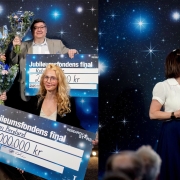
From left: Lina Hällström, Roberts Joffe, Ivan Carabante, and Linn Berglund at the Jubileumsfonden award ceremony on 14 May 2025 at Vetenskapens hus in Luleå. They had just received their research grants from the fund. Photo: Petra Älvstrand. Transforming Forest Residues into the Future: Bio4Energy Researcher Awarded Prestigious Grant
Fakta RISE pilothall i Örnsköldsvik • 3 våningar • 2 405 m2 • 14 meter hög • Miljöbyggnad Silver (Sweden Green Building Council) • Stora delar byggt i korslimmat trä • Komfort- och proceskyla hämtas från Örnsköldsviksfjärdens botten • Sedumtak (hjälper vattenavrinning och biodiversitet)RISE Giant Park for Development of Bio-based Products, Materials, Opens in Northern Sweden
Researchers Jonas Hedlund and Sofie Zätterqvist have won Luleå University of Technology's award Innovator of the Year 2022.LTU Innovation Award for R&D on Biogas Separation Technology to Bio4Energy Researcher
A so-called photobioreactor with microalgal content, in the laboratories of Christiane Funk and Martin Plöhn, both Bio4Energy. Photo by courtesy of Plöhn and Funk. Researchers to Map Composition of Green Algae, Pave Way for Biotechnology Breakthroughs

Latest news

  • Where sustainable chemistry meets industrial reality10 September, 2026 - 13:58
  • Biomass in large scale 3D printing: building the future layer by layer3 September, 2026 - 14:12
  • Bio4energy Advisory bord meeting (digital)
    Bio4Energy Advisory Board meeting – EU perspectives on the bioeconomy and bio-based resources23 February, 2026 - 11:38

VISITING ADDRESS

Umeå University Campus Map

CONTACT

info.bio4energy@umu.se

LinkedIn

ADDRESS

Bio4Energy

Umeå University

SE-90187 UMEÅ

Sweden

LOG IN

Link to: Starting Soon: Training on Developing Biofuels, Chemicals, Materials Link to: Starting Soon: Training on Developing Biofuels, Chemicals, Materials Starting Soon: Training on Developing Biofuels, Chemicals, Materials Link to: Large Project on Integration of UN SDGs in Forest Management to Target Genetic Tree Breeding Link to: Large Project on Integration of UN SDGs in Forest Management to Target Genetic Tree Breeding Mixed forest. Photo by Anna Strom ©2022.©AnnaStromLarge Project on Integration of UN SDGs in Forest Management to Target Genetic...
Scroll to top Scroll to top Scroll to top