Advanced bioremediation of heavy metals by Nordic microalgae using ashes and effluents from the forest industry

Participants: Christiane Funk (UMU, P5), Sarah Conrad (LTU, P7), Markus Broström (UMU, P4)

Duration: 2026-2027

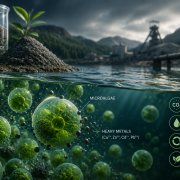
This project explores how Nordic microalgae can be used to remove heavy metals from mine wastewater while simultaneously utilizing nutrients from industrial ashes and effluents. The researchers aim to develop a nature-based and low-energy treatment approach that combines wastewater purification, nutrient recycling and carbon capture.

The project will investigate how microalgae perform under real industrial conditions in northern Sweden and explore advanced methods for biomass handling and metal recovery. By integrating biological treatment with circular resource utilization, the work may support future sustainable water management systems and industrial symbiosis within the bioeconomy.

Call: Annual 2026


Development of a method for frost damage assessment using SilviScan images of increment cores and its genetic analysis in Norway spruce

Participants: Rosario García Gil (SLU, P2), Kathryn Robinson (UMU, P2), Robert Nilsson (RISE, P2)

Duration: 2026-2027

This project addresses the increasing risk of frost damage in boreal forests under changing climate conditions, where warmer winters and early spring temperatures can trigger premature de-hardening in trees. The researchers aim to develop a new method for detecting frost damage in Norway spruce using SilviScan technology, advanced image analysis and wood property measurements.

By combining frost-ring detection with genomic and climate data, the project seeks to improve understanding of frost tolerance and identify tree families with higher resilience to freezing events. The work may contribute to future forest breeding strategies, assisted migration decisions and improved wood quality in northern forestry systems.

Call: Annual 2026


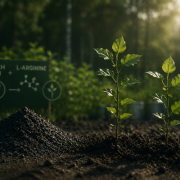
Rising from the ashes – exploring seedling development utilizing L-arginine and P-rich ashes as fertilizers

Participants: Henrik Böhlenius (SLU, P2), Nils Skoglund (UmU, P7)

Duration: 2026-2027

This project aims to develop a novel fertilizer material where phosphorus-rich ash is combined with L-arginine as an organic nitrogen source. By investigating how the material influences nutrient availability and seedling development in poplar and aspen, the researchers seek to support future biomass production systems.

The work combines material development, greenhouse studies and field experiments to explore new approaches for nutrient recycling and ash-based fertilization. The project may contribute to more resource-efficient biomass production and circular fertilization strategies for future biorefineries.

Call: Annual 2026


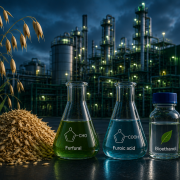
Unlocking the value of oat husk residues through sustainable catalytic biorefinery pathways for a circular Swedish bioeconomy

Participants: Santosh Khokarale (UmU, P6), Leif Jönsson (UmU, P5), Chandani Singh (RISE Processum)

Duration: 2026-2027

This project explores how oat husk residues can be converted into valuable bio-based chemicals and fuels through integrated biorefinery approaches. Using catalytic, electrochemical and biotechnological methods, the researchers aim to produce furfural, furoic acid and bioethanol from agricultural side streams.

The work combines water-based fractionation, catalytic upgrading and fermentation technologies to maximize biomass utilization while reducing environmental impacts. By creating new value chains from oat-processing residues, the project contributes to circular bioeconomy development in Sweden.

Call: Annual 2026


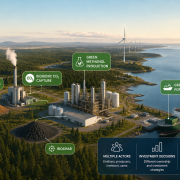
Agent based modelling of the integrated value chains of biogenic CO₂, biochar and green methanol

Participants: Joakim Lundgren (LTU, P1), Kentaro Umeki (LTU, P4), Robert Lundmark (LTU, P1)

Duration: 2026-2027

This project develops an agent-based modelling approach to investigate how integrated value chains for biogenic CO₂, biochar and green methanol may evolve within northern Sweden’s regional energy systems. The work explores how different ownership structures, investment decisions and infrastructure configurations influence economic and system-level outcomes.

By simulating interactions between industrial actors and future energy systems, the project aims to provide knowledge relevant for sustainable system design, policy development and emerging bio-based industries.

Call: Annual 2026


High temperature woody residue conversion in high CO₂ gas environments

Participants: Per Holmgren (UMU, P4), Henrik Wiinikka (LTU, P4), Fredrik Weiland (RISE ETC, P4)

Duration: 2026-2027

This project investigates how woody residues behave in CO₂-rich environments at extremely high process temperatures relevant for future thermochemical conversion technologies. The research focuses on electrified gasification, oxy-fuel conversion and sustainable carbon black production from biomass-derived feedstocks.

The project aims to improve understanding of fuel conversion chemistry, soot formation and ash behavior under high-temperature CO₂ conditions. The results may contribute to more carbon-efficient industrial processes and future fossil-free fuel and material production.

Call: Annual 2026


From Forest Damage to Resource: Converting Resin-Rich Diseased Pine into Renewable Chemicals and Energy (RESET)

Participants: Leonidas Matsakas (LTU, P5), Dan Bergström (SLU, P1)

Duration: 2026-2027

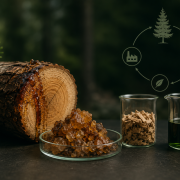
RESET explores how resin-rich diseased pine can be transformed from a damaged forest resource into a valuable feedstock for renewable chemicals, fuels and bio-based materials. The project focuses on developing methods for extraction, sorting and fractionation that enable efficient use of resin-rich wood within future biorefinery systems.

By combining forestry, biomass processing and bioeconomy research, the project aims to establish new value chains based on underutilized forest resources. The work also investigates resource availability, logistics and industrial integration within Swedish forest systems.

Call: Annual 2026


Sustainable, bio-based and safe Na-ion batteries

Participants: Kristiina Oksman (LTU, P5), Xiaoyan Ji (LTU, P6), Stina Jansson (UMU, P7), Anna Strandberg (UmU, P3), Mikael Thyrel (SLU, P3), Fredrik Forsberg (LTU, P4)

Duration: 2026 – 2027

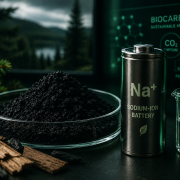
This project explores how forest-derived materials such as lignin, bark and wood residues can be transformed into advanced carbon materials for sodium-ion batteries. By tailoring the structure of bio-based carbons and developing new electrolyte systems, the researchers aim to support future battery technologies with reduced reliance on fossil-based materials.

Using advanced characterization methods and electrochemical testing, the project will investigate how sodium ions interact with the developed materials and how their structure influences battery performance. The work combines materials science, electrochemistry and forest-based resources within emerging Swedish battery research ecosystems.

Call: Annual 2026


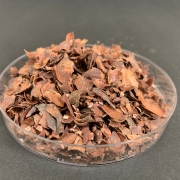
Cocoa bean shells are one of the raw materials to be used in this project. Photo by courtesy of Kristiina Oksman.

Sustainable packaging materials from renewable raw materials sources

Participants: Kristiina Oksman (LTU, P5), Sandra Winestrand (UMU, P5)

Duration: 2024 – 2025

Call: Annual 2023


Nitrogen in biochars from biomass residual streams – forms, fate and plant availability in soils

Participants: Christoffer Boman (UMU, P7), Sandra Jämtgård (SLU, P7)

Duration: 2024 – 2025

Call: Annual 2023